If your skincare has started stinging, your skin feels tight after washing, or redness is taking days rather than hours to settle, the problem is probably not the products you are using. It is the barrier underneath them.
A damaged skin barrier is one of the most common reasons skincare stops working, and one of the most commonly missed. Here is how to recognise it, what causes it, and how long it actually takes to repair.
What is the skin barrier?
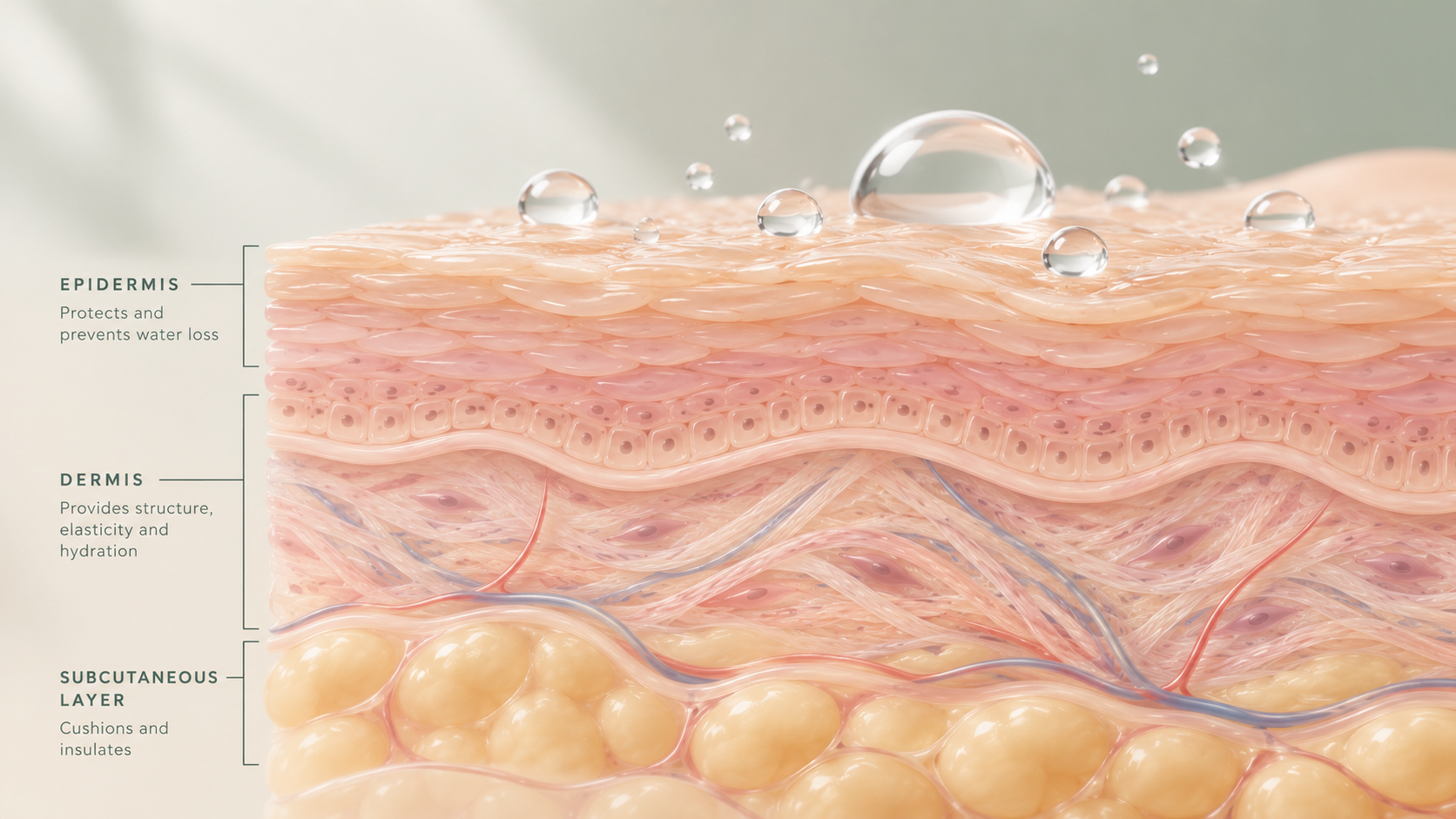
The outermost layer of your skin works a bit like brickwork. Skin cells are the bricks, and they sit in a mortar of fats and oils, mainly ceramides, cholesterol and fatty acids.
That mortar does two jobs. It keeps water in, and it keeps irritants, allergens and bacteria out.
When it is intact, your skin feels comfortable and tolerates most things. When it is disrupted, water escapes faster than your skin can replace it and everything that touches your face has an easier route in. That is why barrier damage shows up as both dryness and sensitivity at the same time.
What are the signs of a damaged skin barrier?
It rarely announces itself as one obvious thing. Usually it is several of these at once:
- Products that used to be fine now sting, particularly on application
- Tightness after cleansing that does not settle until you apply something
- Redness that lingers for days rather than calming down within hours
- Rough or flaky patches that moisturiser does not seem to fix
- Increased sensitivity to things you previously tolerated, including weather
- Breakouts alongside dryness, which feels contradictory but is common
- Dullness, because light reflects badly off an uneven surface
If you have three or more of these, it is worth treating as a barrier problem rather than hunting for a better moisturiser.
What damages the skin barrier?
Most barrier damage is cumulative rather than caused by one event.
Over-exfoliation is the commonest culprit. Acids, retinoids and physical scrubs all have their place, but used too often or stacked together they remove the barrier faster than it rebuilds.
Hot water and long showers strip out the lipids you are trying to keep. It feels wonderful and it is one of the most reliable ways to make things worse.
Cold air and central heating. Cold air holds less moisture, and heating dries the air indoors, so from autumn onwards you move between two dehydrating environments with no relief. This is why so many people notice the problem from about October.
Harsh cleansers. Anything that leaves your skin feeling squeaky has taken more than it should.
Fragrance, which is among the commonest irritants on skin that is already compromised.
Underlying skin conditions. Eczema in particular involves a barrier that is impaired to begin with, which is why eczema-prone skin flares as soon as the weather turns.
How long does it take to repair a skin barrier?
Usually two to four weeks of doing the right things, though more significant damage can take longer.
The mistake most people make is adding products. Barrier repair is mostly about subtraction.
Strip the routine back. A gentle cleanser, a decent moisturiser, sunscreen. That is it until things settle.
Pause the actives. Acids, retinoids, vitamin C, exfoliants. All of them, not some of them. You can reintroduce one at a time once your skin is comfortable again.
Moisturise damp skin. Within two minutes of washing, while skin is still slightly wet. You are trapping water that is already there rather than trying to add it back, and it works better than switching to a more expensive cream.
Go heavier for the season. Ointments hold moisture better than creams, and creams better than lotions. A summer lotion is usually too light for a British winter.
Go fragrance-free for the repair period at minimum.
Turn the shower down. Warm rather than hot, and shorter.
Can you have skin treatments if your barrier is damaged?
Usually not yet, and this is worth knowing before you book anything.
Skin that is inflamed, flaring or compromised does not respond to treatment the way healthy skin does. Results are less predictable, recovery takes longer, and you are more likely to react to something you would otherwise tolerate. Peels and resurfacing treatments in particular are poorly suited to a damaged barrier.
This is why any decent consultation starts by assessing the barrier rather than by recommending a treatment. If your skin is not in a fit state, the right answer is to repair it first and treat it afterwards, usually a few weeks later.
If a clinic is happy to treat a visibly compromised barrier without raising it, that tells you something.
What about eczema?
Eczema is a medical condition, not simply a dry skin problem, and it involves a barrier that is impaired as a baseline rather than just temporarily damaged.
The measures above still help, but they are supportive rather than curative. See your GP or pharmacist if skin is cracking or bleeding, if it looks red, hot or infected, if itching is disturbing your sleep, or if nothing has improved after a few weeks of doing everything right.
It is worth being properly assessed rather than managing it indefinitely with whatever is in the bathroom cabinet.
When to get help
Most barrier damage settles within a month of a stripped-back routine. Come and have it looked at if:
- Nothing has improved after four weeks
- Your skin is painful rather than just uncomfortable
- You are reacting to almost everything
- You are not sure whether you are dealing with barrier damage or an underlying condition
Sometimes the answer is a different routine. Sometimes it is a referral. Occasionally it is a treatment, but only once the barrier is in a fit state to take one.
Frequently asked questions
What are the signs of a damaged skin barrier?
Products that suddenly sting, tightness after cleansing, redness that takes days to settle, rough or flaky patches, and new sensitivity to things you previously tolerated. Three or more together usually means a barrier problem rather than a product problem.
How long does it take to repair a skin barrier?
Usually two to four weeks of a stripped-back routine, though more significant damage takes longer. Repair is mostly about removing products rather than adding them.
What should I stop using?
All actives while the barrier recovers. Acids, retinoids, vitamin C, exfoliants, scrubs. Reintroduce one at a time once skin is comfortable, not all at once.
Can I still use retinol with a damaged skin barrier?
Not while it is actively compromised. Retinoids are a common cause of the problem in the first place, and continuing through it usually prolongs the damage. Pause, repair, reintroduce slowly.
Can you have facials or treatments with a damaged skin barrier?
Usually not until it has recovered. Compromised skin responds unpredictably, takes longer to settle, and is more likely to react. Peels and resurfacing treatments in particular should wait.
Is a damaged skin barrier the same as eczema?
No. Eczema is a medical condition involving a barrier that is impaired as a baseline. Barrier damage from over-exfoliation or weather is usually temporary and self-correcting with the right care. If you are unsure which you are dealing with, get it looked at.
Does drinking more water help?
Not meaningfully. Barrier damage is a lipid and structure problem rather than a hydration-from-within problem. Worth drinking water for other reasons.